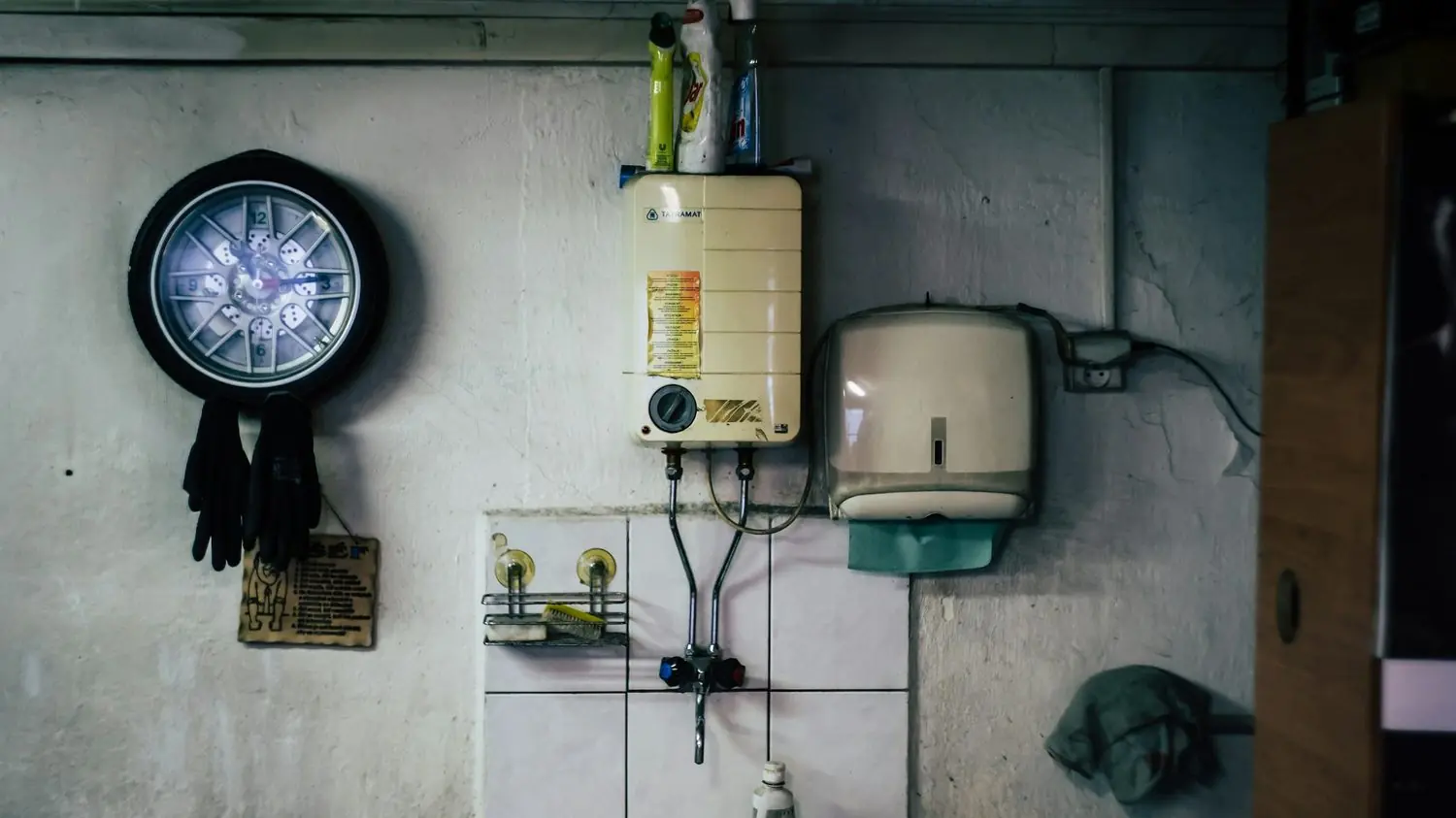
Going tankless in a cold climate
Tankless Water Heater Installation in Minneapolis, MN
Endless hot water sounds great. In Minneapolis it takes the right size unit, enough gas and a vent that stays clear of snow.
A tankless water heater can work very well in a Twin Cities house. It can also disappoint, and when it does the cause is nearly always the install: a unit sized for summer water, a gas line that cannot feed it, or a vent that ices over.
Ask the installer how they sized the unit, how they plan to feed it gas and where the vent will exit. Good answers to those three questions predict a good result.
Size a tankless water heater for Minneapolis winter water
A tankless water heater is sized by flow and temperature rise. The installer takes the coldest inlet temperature the house will see, subtracts it from the setpoint, and looks up how many gallons per minute the unit can heat by that much.
In Minneapolis the incoming water tracks the Mississippi. The city reported the river averaging about 37 F in December 2024 and about 74 F in June. Bringing 37 F water up to 120 F is a rise of more than 80 degrees. Many units that look big on paper deliver only a few gallons per minute at that rise.
Count the fixtures that might run at once on a winter morning. Two showers and a dishwasher need a much larger unit than one shower. Some houses end up with two units linked together.
Suburbs on deep wells start a little warmer in midwinter than the river does, but not by enough to change the math much. Size for the worst week of January and the unit will coast the rest of the year. Size for an average day and you will notice every cold snap.
Gas supply in older Minneapolis houses
A whole house tankless water heater burns a lot of gas when it fires, often far more than the tank it replaces. The gas line from the meter to the heater has to carry that load while the furnace and other appliances run too.
In many older houses the existing line is too small. The installer may need to run a larger line from the meter, and sometimes the gas utility has to check whether the meter itself can handle the added load. In Minneapolis that utility is CenterPoint Energy. In St. Paul it is Xcel Energy.
An undersized gas line causes the most common tankless complaint: water that turns cold when someone else starts a shower or the furnace kicks on. It costs far less to size the line right at install than to fix it later.
Venting, condensate and snow
Most tankless water heaters vent through the side wall, often out through the rim joist above the foundation. Condensing models use plastic pipe, and many draw combustion air through a second pipe.
Placement on the outside wall matters in Minnesota. The terminals need to sit above the depth that snow drifts on that side of the house, away from windows and doors, and away from the gas meter and regulator. A terminal under a roof edge can get buried by sliding snow or iced by drips.
Condensing units drain acidic condensate, usually through a small neutralizer into a floor drain. That drain line has to stay inside the heated part of the house. A line run outside or through a cold crawl space will freeze and shut the unit down.
Hard water and service access
Hard water is the other half of tankless success. Minneapolis softens its water at the plant, so city homes start with moderate hardness. Many suburban homes on wells do not. Edina, Plymouth and St. Louis Park all publish hardness figures well above 15 grains per gallon for their city water. On water like that, a tankless water heater without a softener scales up fast.
If your house has hard well water, plan on a working softener, a scale filter recommended by the maker, or a descaling flush every year. Ask the installer what the maker requires on water as hard as yours, since some manuals set limits.
Ask for isolation valves with service ports on the hot and cold lines. They let a plumber descale the water heater in an hour without cutting pipe. Leave room around the unit so the cover can come off and a bucket and pump can sit under it.
Think about where the old tank space goes too. Many people use it for storage. Leave the floor drain open and reachable.
What a tankless install costs
The water heater itself is only part of the bill. Gas line work, venting, a condensate neutralizer, isolation valves for future descaling and removal of the old tank all add up. The permit is extra too.
| Job | Typical Twin Cities range |
|---|---|
| Whole house condensing tankless, installed | $3,500 to $6,500 |
| Larger gas line from the meter | $400 to $1,200 |
| Isolation valves with service ports added | $150 to $350 |
| Condensate neutralizer and drain | $150 to $400 |
| Descaling flush, later visits | $175 to $350 |
Typical local ranges for planning. They are not a quote or an offer.
Ask for a quote that lists each item. If one installer is far cheaper, check whether the gas line or venting work was left out. There is more on local water and costs where the site begins, under water heater repair across the Twin Cities, if you want the wider view.
Ask the installer to show proof of licensing and insurance, and get every line item in a signed quote before work begins.
Common questions: tankless installation
Will tankless save me money in Minnesota?
It can trim standby losses since there is no tank to keep hot. The install usually costs much more than a tank, so the payback takes years. Many people choose it for space or for long showers more than for savings.
Can a tankless water heater run two showers in January?
Only if it is sized for the large temperature rise winter water needs. Ask the installer what flow the unit delivers at a rise of about 80 degrees.
Do I need a new gas line?
Often, in older houses. The installer should measure the existing line and add up every gas appliance on it before saying yes or no.
Where does the condensate go?
Through a neutralizer and into a floor drain or condensate pump inside the heated basement. Keep that line away from cold walls and crawl spaces.