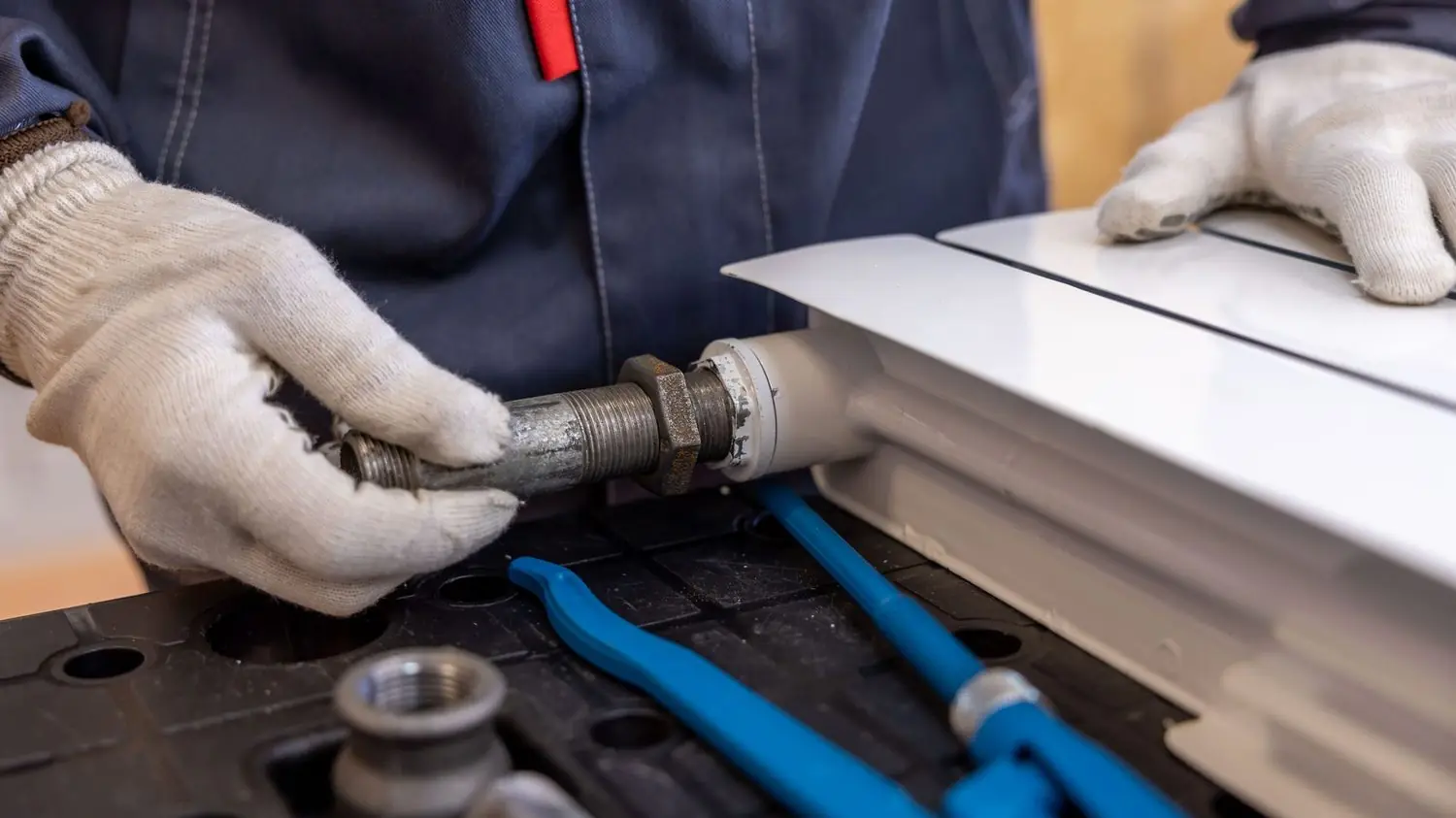
New and added water heaters
Water Heater Installation in Minneapolis, MN
A new heater for a remodel, an addition, a second unit, or a move to a different fuel.
A new water heater involves a lot more than a tank and two pipes. In Minneapolis the city requires a plumbing permit to install or replace a water heater, and most suburbs have their own permit rules. The permit covers the gas connection, the venting, the relief valve piping and the water connections.
This page covers new installs: a heater going into a house that did not have one in that spot, a second unit, or a change in type. Like-for-like swaps of a failed tank are covered on the replacement page.
Picking the water heater spot in a Minneapolis house
In most Twin Cities houses the basement is the natural home for a water heater. It sits near the gas meter, near the main drain and often near a floor drain. Above freezing all winter, it also gives the heater a stable room to work in.
When a heater moves, or a second one goes in, the plumber has to think about a few things:
- How far the hot water has to travel to the main bathroom and the kitchen. Long runs mean waiting for hot water.
- Where the exhaust goes. An atmospheric tank needs a proper flue. Power vent and condensing units need a clear spot on the outside wall, away from windows and above the snow line.
- Whether there is a floor drain or room for a pan with a drain line.
- Whether the room has enough air for combustion, or needs vents added.
- Clearance in front of the heater so someone can service it later.
Gas, venting and air
A gas heater needs a gas line sized for its burner, with a shutoff valve and a sediment trap at the connection. Adding a heater to an existing line can starve other appliances, so the plumber checks the line size against the total load on the meter.
Venting is where installs go wrong most often. A standard tank vents by natural draft and needs a flue that is the right size, pitched up and properly connected. Power vent units push exhaust through plastic pipe to a side wall. That terminal has to sit high enough that winter snow does not bury it, and away from doors, windows and the gas meter.
Tight newer houses and finished basements can starve a gas heater of air. If the utility room has a door, the plumber may add louvers or ducted air from outside.
Water connections and safety parts
Every tank gets a temperature and pressure relief valve with a discharge pipe that ends near the floor or over a drain, where you can see it. That pipe stays open. No cap, no plug, no valve on it.
Many Twin Cities houses have a pressure reducing valve near the water meter. That valve closes off the system, so water that swells as it heats is trapped. A small expansion tank on the cold side gives it somewhere to go. Skip it and the relief valve tends to spit water each time the burner cycles.
Other details worth asking about:
- Dielectric unions or nipples where steel meets copper, to slow corrosion.
- A drain pan under any heater installed above a finished floor.
- A full port shutoff on the cold inlet that actually turns.
- A mixing valve if the tank will be set hotter than 120 F.
Getting the heater into an old basement
Plenty of Minneapolis and St. Paul houses went up before 1940, when nobody planned basement stairs around a 50 gallon tank. Narrow stairs, a tight turn at the landing and a low header can make moving a heater the hardest part of the job.
A plumber should look at the route before quoting. Sometimes a short tank, a lowboy model or a smaller tank with faster recovery solves it. In a few houses the only practical route is through a basement window or a bulkhead door.
Old basements bring other surprises. Galvanized pipe that crumbles when it is touched, a cold water shutoff that will not close, a floor that slopes away from the drain. A good quote mentions these risks up front so they do not show up as extras later.
Minneapolis permits and inspection
The installing plumber normally pulls the permit and schedules the inspection. Ask about it when you get the quote. Skipping the permit tends to surface at sale time. The inspection also puts a second set of eyes on the venting and gas work at no extra cost.
The cost of a new install depends on how much gas line, venting and water piping has to be run. Getting quotes from more than one company is reasonable on a larger job. Ranges for the common heater types are on the front page of this site, under Minneapolis water heater repair.
Have the installer show you a license number and insurance certificate, and put the full price on paper, before any pipe gets cut.
Common questions: installation
Is a permit needed for a new install in Minneapolis?
Yes. Minneapolis puts water heater installs and swaps on its list of work that needs a plumbing permit. Suburbs set their own rules, so the installing plumber should confirm for your city.
Why does my new heater need an expansion tank?
If your house has a pressure reducing valve or a check valve on the water line, heated water cannot push back into the main. The expansion tank absorbs that extra volume so pressure does not spike.
Can I put a water heater in a closet upstairs?
Sometimes. It needs proper venting, enough combustion air if it is gas, and a pan with a drain line. A basement is usually simpler and safer for the house.
How long does a new install take?
A straightforward install takes most of a day. Running new gas line or venting through a finished space can push it into a second day.